
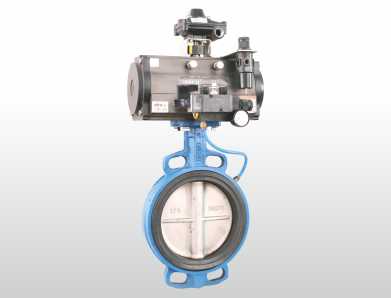
If you’re in the market for a new valve, you may wonder whether a butterfly valve with an actuator is the right choice. In this blog post, we’ll take a close look at how butterfly valves work and the benefits they offer. We’ll also give you some tips on how to get the most out of your butterfly valve with an actuator.
Introduction
A butterfly valve with actuator is vital equipment in many industries. It is a type of valve that controls the flow of liquids and gasses through a pipe using a disk that rotates to open or close the passageway. Butterfly valves are classified as either lugged or wafers, depending on the design of the disk and body.
Lugged butterfly valves have a threaded hole in the body that accepts a lugged shaft connected to an actuator. Wafer butterfly valves have an unthreaded hole in the body that agrees with a wafer shaft, which is also connected to an actuator. The actuator is what allows the user to control the opening and closing of the valve with ease.
The benefits of using a butterfly valve with an actuator are many. They include:
- Ease of operation: The actuator makes it easy to open and close the valve, even when there is high pressure in the pipeline.
- Compact design: Butterfly valves are much smaller than other valves, making them ideal for use in space-restricted areas.
- Cost-effectiveness: Butterfly valves are very cost-effective in terms of the initial purchase price and ongoing maintenance costs.

What is a butterfly valve with an actuator?
A butterfly valve with an actuator is a type of quarter-turn valve used to control the flow of fluids in a piping system. The butterfly valve gets its name because the disc, attached to a stem, looks like a butterfly in the open position. Butterfly valves are classified as either lugged or wafers, depending on how they are designed to be installed. Lugged butterfly valves have lugs on the body that are used to bolt the valve to a flange, while wafer butterfly valves have a body designed to be sandwiched between two pipe flanges.
Butterfly valves are most commonly used in applications requiring a low-pressure drop across the valve, such as in water and air systems. They are also well suited for use in applications requiring bi-directional flow, such as in sewage treatment plants. Butterfly valves can be actuated manually with a lever or handle or automated with an electric or pneumatic actuator.
When selecting a butterfly valve for a particular application, it is essential to consider the operating conditions, such as the maximum pressure and temperature of the fluid and the desired flow rate. Other factors to consider include the type of actuator (if automated), material compatibility, and ease of maintenance.
How does a butterfly valve work?
A butterfly valve works by using a disc attached to a stem. The disc can rotate to open and close the valve. The disc is parallel to the fluid flow when the valve is open. This allows fluid to flow through the valve with little resistance. When the valve is in the closed position, the disc is perpendicular to the fluid flow. This creates a seal that prevents fluid from flowing through the valve. Butterfly valves can be opened and closed manually or automatically with an actuator.
What are the benefits of using a butterfly valve with an actuator?
Some benefits of using a butterfly valve with an actuator include the following:
- Automated butterfly valves can be controlled remotely, which is convenient and can save time and labor costs.
- Butterfly valves provide tight shutoff, even when used in high-pressure applications. This is because the disc creates a seal with the valve’s body when closed.
- Butterfly valves are relatively small and lightweight, which makes them easy to install and transport.
- The simple design of butterfly valves makes them easy to maintain.
How can you get the most out of your butterfly valve with an actuator?
There are a few things you can do to get the most out of your butterfly valve with an actuator:
1. Make sure you select the correct size valve for your application. If the valve is too small, it cannot handle the required flow rate. If the valve is too large, there will be an excessive pressure drop across the valve, leading to problems.
2. Consider the system’s operating conditions when selecting a butterfly valve. Ensure the maximum pressure and temperature of the fluid are within the limits of the valve and that the desired flow rate can be achieved.
3. Choose a material that is compatible with the fluid being transported. This will help to prevent corrosion and leaks.
4. Automate the valve with an electric or pneumatic actuator to make it easier to control remotely. This can be especially useful in systems where operating the valve manually is impossible.
5. Perform regular maintenance on the valve to ensure it operates correctly and prevent any potential problems.
Conclusion
In conclusion, a butterfly valve with an actuator is a versatile and valuable tool for various applications. When selecting a butterfly valve for your application, consider the operating conditions, such as the maximum pressure and temperature of the fluid and the desired flow rate. Other factors to consider include the type of actuator (if automated), material compatibility, and ease of maintenance.