
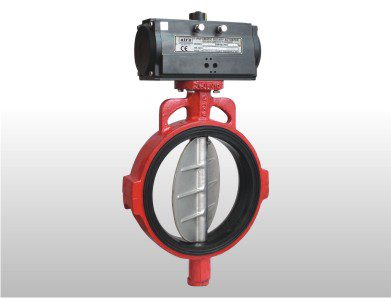
If you’re looking for a versatile, reliable valve for your next project, you may wonder if a butterfly valve is a right choice. In this blog post, we’ll cover everything you need to know about butterfly valves, from how they work to their benefits and disadvantages. Ultimately, you can decide if a butterfly valve suits your project.
What is a butterfly valve?
A 2 inch butterfly valve is a quarter-turn valve used to control the flow of liquids and gasses. It consists of a disk-shaped closure element mounted on a spindle and operated by a handle or lever. Butterfly valves are available in various sizes, from small diameter valves used in domestic applications to large diameter valves used in industrial applications.
Butterfly valves are classified according to how the disk is connected to the spindle. In a wafer butterfly valve, the disk is sandwiched between two halves of a body and secured with bolts. In a lug butterfly valve, the disk is attached to welded or bolted lugs to the body.
Butterfly valves are well suited for use in applications where space is limited, as they require very little clearance around the body. They are also relatively lightweight and easy to operate. However, they are not suitable for use in high-pressure applications, as the disk may be forced open by the pressure of the fluid.
If you need further information about butterfly valves, please do not hesitate to contact us. We would be happy to answer any questions you may have.

Why are butterfly valves used?
Butterfly valves are used in various applications where it is necessary to control the flow of fluids. They are particularly well suited for use in pipelines and in systems where there is a need for frequent operation of the valve. Butterfly valves are also used when isolating a section of pipe from the rest of the system is necessary.
How does a butterfly valve work?
A butterfly valve is a quarter-turn valve that uses a disk to control fluid flow through a pipeline. The disk is attached to a shaft connected to a lever or handle. The position of the disk determines the amount of flow allowed through the valve.
When the disk is in the open position, the hole in the centre of the disk aligns with the opening in the valve body, allowing fluid to flow through. When the disk is closed, the hole in the centre of the disk is blocked by the valve’s body, preventing fluid from flowing through.
The disk can be moved between open and closed, allowing precise control over the fluid flow. Butterfly valves are often used where a large amount of flow needs to be controlled with a slight disk movement.
Butterfly valves are simple and reliable and can be used for liquids and gasses. They are typically made from metals such as brass, stainless steel, or cast iron, although they can also be made from plastic or other materials.
What are the benefits of butterfly valves?
Butterfly valves offer several advantages over other types of valves, including:
•They are easy to operate – Butterfly valves can be opened and closed with just a quarter turn of the handle. This makes them ideal for use in applications where frequent operation is required.
•They are compact – Butterfly valves are much smaller than other valves, such as a gate or ball valves. This makes them ideal for use in applications where space is limited.
•They are lightweight – Butterfly valves are typically made from metals such as brass, stainless steel, or cast iron, all relatively light. This makes them easier to install and reduces the system’s overall weight.
•They have a low operating torque – The disk in a butterfly valve is attached to a shaft connected to a lever or handle. The position of the disk determines the amount of flow allowed through the valve. This design results in a lower operating torque than other valves, such as ball valves.
•They are bi-directional – Butterfly valves can be installed in either direction, making them ideal for use in applications where the flow direction may change frequently.
Are there any disadvantages to butterfly valves?
While butterfly valves offer many advantages, there are also some potential disadvantages to consider:
1. Butterfly valves can be more challenging to repair than other valves since they require disassembling the entire valve to access the disk.
2. Butterfly valves may not be suitable for applications where a very high degree of accuracy is required since the disk can become slightly misaligned over time.
3. Butterfly valves may not be able to handle very high pressures or temperatures, depending on the materials used.
4. Butterfly valves can be more susceptible to clogging than other valves due to the way the disk sits in the pipeline.
How is a butterfly valve the right choice for my project?
There are a few key factors that you should consider when deciding if a butterfly valve is a suitable choice for your project:
1. The type of fluid that will be flowing through the valve – Butterfly valves can be used with liquids and gasses, but they are only suitable for some fluids. For example, they are not recommended for use with highly viscous liquids or those that contain solids.
2. The pressure and temperature of the fluid – Butterfly valves have a little pressure and temperature handling capacity, so ensuring the fluid will stay within these limits is essential.
3. The required flow rate – Butterfly valves have a relatively low flow rate compared to other valves, so you need to ensure that this is sufficient for your needs.
4. The size of the pipeline – Butterfly valves are available in various sizes but are only suitable for some pipelines. Make sure to choose a valve that is the right size for your pipeline.
5. The durability of the valve – Butterfly valves are generally quite durable, but they can be susceptible to corrosion or wear and tear damage over time. Make sure to choose a material compatible with the fluid that will withstand the operating conditions.