
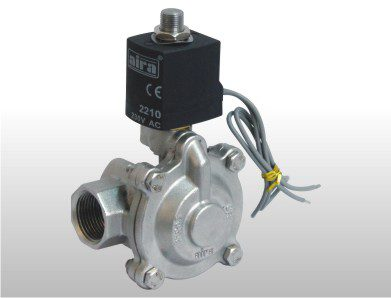
If you’re looking for a way to control the flow of liquids or gasses in your home or business, a two way solenoid valve may be the perfect solution. But with so many different types and sizes of 2 way solenoid valves on the market, how do you know which suits your needs?
In this blog post, we’ll take a closer look at two way solenoid valves and explain why they’re used, what factors you should consider when choosing one, and how to install and troubleshoot them properly. By the end, you’ll better understand two-way solenoid valves and be able to choose the right one for your needs.
What is a two way solenoid valve?
A 2 way solenoid valve is a valve that uses an electric current to control the flow of fluid. The current can be either AC or DC. The most common type of 2 way solenoid valve is the direct acting type, which means that the electric current directly controls the movement of the internal parts of the Valve. This type of Valve is used in many applications, including water treatment, food and beverage processing, and chemical processing.
Why are two way solenoid valves used?
A 2 way solenoid valve is a device that controls the flow of fluid in a pipe using electromagnetism. It consists of a coil of wire that generates a magnetic field when an electric current is passed through it. This magnetic field can be used to open or close a valve, depending on the orientation of the coil.
Two way solenoid valves are used in various applications, including controlling water flow in plumbing systems, regulating airflow in HVAC systems, and managing the flow of oil and gas in industrial pipelines. They are often used because they are less expensive than other types of valves and because they can be controlled remotely using electrical signals.

What factors should you consider when choosing a two way solenoid valve?
When choosing a two way solenoid valve, there are a few factors that you should take into consideration to ensure that you select the best Valve for your application.
The first factor to consider is the operating environment of Valve. This includes factors such as the temperature, pressure, and humidity of the fluid flowing through the Valve. You must ensure that the materials used in constructing the Valve are compatible with these conditions. For example, if you use the Valve in an environment with high temperatures, you must choose a valve made from materials that can withstand high temperatures without deforming.
The second factor to consider is the flow rate of the fluid. This is important because it will determine the Valve size you need. If you try to use a small valve for a fluid with a high flow rate, it will become clogged and may be unable to open or close correctly. Conversely, if you use a large valve for a fluid with a low flow rate, it will not be able to regulate the flow properly and may cause leaks.
The third factor to consider is the pressure drop across the Valve. This is important because it determines how much power is required to operate the Valve. A high pressure drop across the Valve will require more power to open and close than a low pressure drop valve.
Finally, you should also consider the type of actuator you want to use with your two way solenoid valve. The two most common types of actuators are pneumatic and hydraulic. Pneumatic actuators use air pressure to actuate the Valve, while hydraulic actuators use fluid pressure. Each type has advantages and disadvantages, which should be considered when deciding.
How do you properly install a two way solenoid valve?
To properly install a two way solenoid valve, you must first understand the piping system in which it will be installed. You need to know the flow rate of the fluid and the pressure drop across the Valve to determine the size of the Valve that is needed. The actuator must also be properly sized for the application.
Once you have selected the proper two way solenoid valve for your application, you must install it in the piping system. The first step is to cut a hole in the pipe that is big enough for the valve body. The next step is to weld or solder the valve body into place. Afterward, you must connect the actuator to the valve body and secure it. Finally, you need to connect an electrical power source to the coil and test the Valve to ensure it works properly.
Tips for troubleshooting two way solenoid valves
If you are having trouble with your two way solenoid valve, there are a few things you can do to troubleshoot the problem.
First, ensure the power supply and the correct voltage are turned on. If the power is off, turn it on and check the voltage. If the voltage is incorrect, adjust it accordingly.
Next, check the coil to see if it is damaged. If the coil is damaged, it will need to be replaced.
If the coil is not damaged, check if the electrical connections are loose. Tighten any loose connections and test the Valve again.
If the Valve still does not work, the actuator may have a problem. Check to see if the actuator is connected correctly to the valve body and is secure. Also, check to see if there is any damage to the actuator. If there is damage, you will need to replace the actuator.
Finally, check for leaks in the piping system. Turn off the power supply and disconnect the actuator from the valve body. Then, open up the Valve and look for any leaks. If you find a leak, you must repair or replace the pipe.